

| Local 292 Apprenticeship |
The Training Program for Apprentices in Local 292 instructs
apprentices in the skills they need to work in today's industrial sheet
metal construction industry. Our apprentices learn about many types
of "sheet metal" projects that many other local union apprentices
never get a chance to see. We train our apprentices to meet the
demands of our local contractors and therefore very seldom work on
HVAC systems. We handle the heavy jobs that are related to the
manufacturing and installation of automotive and industrial paint
finishing systems.
apprentices in the skills they need to work in today's industrial sheet
metal construction industry. Our apprentices learn about many types
of "sheet metal" projects that many other local union apprentices
never get a chance to see. We train our apprentices to meet the
demands of our local contractors and therefore very seldom work on
HVAC systems. We handle the heavy jobs that are related to the
manufacturing and installation of automotive and industrial paint
finishing systems.
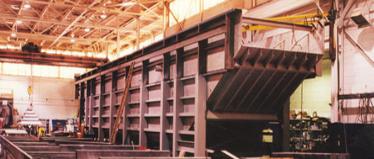
Shown here is a phosphate stage tank being
assembled in one of our employer's shops.
assembled in one of our employer's shops.
Major points of study include:
- Welding
- Blueprint reading
- Drafting
- Detailing
- Pattern development
- Layout
- Design of systems
- Trade related math
- Safety
- Rigging
- AutoCad
- Architectural sheet metal
- Metallurgy
Systems instructed on:
- Phosphate/E-coat systems
- Oven and heating technology
- Paint booth systems
- Incineration and VOC systems
- Air supply houses
- Robotic basics
- Small parts systems
| Safety Safety and health training are major components of this program with all current apprentices acquiring OSHA 30 hour and MUST training cards. Active demonstrations of fire safety, fall protection, rigging safety, and welding safety are extremely important to our contractors. At the Local 292 Training Center we try our best to educate our apprentices in all aspects of safety. |
| What are we training? Included in the program are;
Welding.
Each year of the four year program we focus on a process and train our apprentices to reach certification levels. Welding is conducted on all types of materials including stainless steel, aluminum, mild steel, and coated products (such as alumininized and galvanized) steel and gages ranging from 20 gage to 1/2" plate. |
| When are Apprentices Trained ? Qualified apprentice sheet metal workers take part in a four year program that ultimately requires 768 hours of classroom instruction, and 8000 on the job training hours before graduation. A registered apprentice with Local 292 receives on-the-job training with cooperating employers in the area, and most of the apprentice training is done at our training facility for eight hours once every two weeks. |

| Our apprentice program is comprehensive and requires time, commitment, and attention to study. The courses apprentices take are demanding and require repetition, practice, and professional attitude. It is not just a JOB!! It's a career. |
Here are some other important details about the program:
| Are you ready for a career in Sheet Metal ? Aside from the entrance requirements, sheet metal apprentices should also possess a number of other important attributes. They need to demonstrate ability in math, including basic geometry and trigonometry. They also need good eye-hand coordination, spatial and form perception, and manual dexterity. Apprentices should also exhibit patience, dependability, attention to detail, and the ability to work and get along with others. |
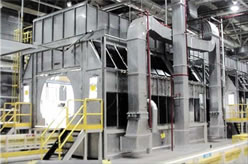
This is a picture of a dry booth system
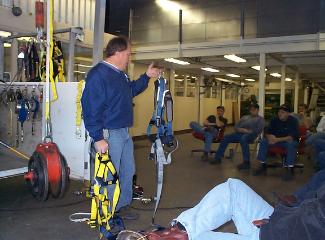
Fall protection class
Instructors
The Training Center is staffed by a
full-time Coordinator/Instructor and a full
time Welding Instructor with several
part-time instructors in the welding
process.
The Training Center is staffed by a
full-time Coordinator/Instructor and a full
time Welding Instructor with several
part-time instructors in the welding
process.
The Facility
Classes are held in the Sheet Metal
Workers' Training Center. The building
is a two-story structure enclosing
12,000 square feet including a
classroom, shop, welding lab,
Classes are held in the Sheet Metal
Workers' Training Center. The building
is a two-story structure enclosing
12,000 square feet including a
classroom, shop, welding lab,
If accepted into the Apprenticeship Program, the mandatory requirements for completion of
the Program are:
• A minimum of four years from the date of indenture into the Apprenticeship Program.
• A minimum of 96 school days attended plus completion of three separate evening class
session
• A minimum of 8000 hours of On the Job Training.
• Satisfactory completion of all homework assignments, required projects and upgrades
tests.
• A current “American Red Cross Standard First Aid” card.
• 4 Welding certifications
• Each apprentice will be required to sign an International Training Institute (ITI) Education
Loan Agreement (ELA) and Textbook Agreement prior to the start of each year of
apprenticeship training.
• Each apprentice will be required to sign an Apprentice Indenture Agreement before
entering the Apprenticeship Program.
A physical examination and Drug Screening may be required prior to being employed.
the Program are:
• A minimum of four years from the date of indenture into the Apprenticeship Program.
• A minimum of 96 school days attended plus completion of three separate evening class
session
• A minimum of 8000 hours of On the Job Training.
• Satisfactory completion of all homework assignments, required projects and upgrades
tests.
• A current “American Red Cross Standard First Aid” card.
• 4 Welding certifications
• Each apprentice will be required to sign an International Training Institute (ITI) Education
Loan Agreement (ELA) and Textbook Agreement prior to the start of each year of
apprenticeship training.
• Each apprentice will be required to sign an Apprentice Indenture Agreement before
entering the Apprenticeship Program.
A physical examination and Drug Screening may be required prior to being employed.
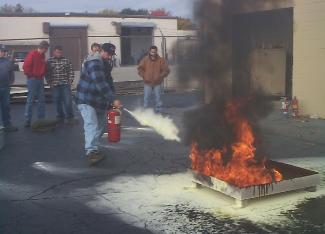
Fire extinguisher safety classes are
given to Apprentices before a real fire
on a job site happens !!
given to Apprentices before a real fire
on a job site happens !!
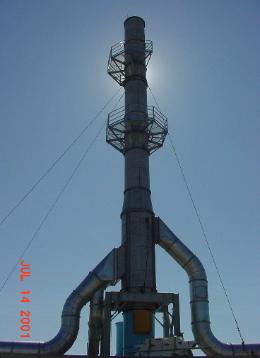
| Exhaust stack with several breechings and platforms |
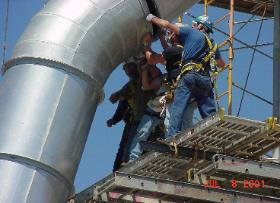
Field fitting elbow together
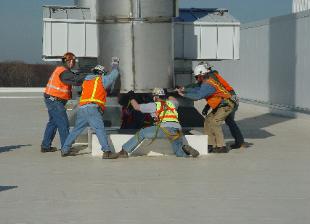
Roof crew setting a stack by helicopter

Sky Crane Helicopter

9 Stacks with platforms built and installed by Sheet Metal Workers
 |
| |
 |
| |
 |
| |
 |
| |
 |
| |
 |
| |
 |
| |
 |